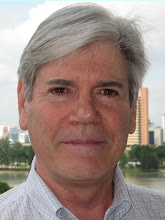
Quoted by the Financial Times on Valentine’s day: “Philip Verleger, an energy economist, argues that ‘nightfall is coming’ for big oil companies, threatened on one side by the rise of renewable energy and climate policies that will curb the growth of fossil fuel demand, and on the other by the smaller, nimbler companies that lead the shale oil and gas industry.”
“The companies that are wedded to high-cost projects, like deep water in Brazil, are going to have to take some large write-downs,” he says. “The likelihood that those investments are going to pay off over the next 20 years is extremely low.”
Companies that put their hopes on a strong rebound in oil “aren’t going to make it”, he adds.
In fact anyone who has watched Jeremy Rifkin’s presentation on the Third Industrial Revolution & a Zero Marginal Cost Society (view it here: https://youtu.be/5mQj574Cv_k ) will realise that fossil fuel prices will not recover sufficiently to make current or future oil-major funded and developed large projects viable.
Oil Major Executives should abandon their pipe dreams about the golden days of crude prices returning, as they did before the previous price dip crises; el Dorado will not rise again from the mists of the future.
There is an oil glut because oil is in less demand; a fundamental shift towards renewable sources of energy has taken place and is gathering speed.
Oil Exec’s should take on-board Ms Nadya Zhexembayeva’s advice and reinvent their business models; her short but telling evocation to reinvent can be viewed here: https://youtu.be/f4kySpcdvFg
It is time to acknowledge that Change has Changed and to Embrace the Exponential.
Investing in renewable energy production, storage and distribution infrastructure is the only viable future strategy for the medium and long term.
Showing posts with label globalization. Show all posts
Showing posts with label globalization. Show all posts
Thursday, February 18, 2016


Tuesday, September 22, 2015
Why write “The Chameleon in the Room”? How does it differ from other Risk Books?
My purpose in writing this book was to fill the gap that I perceive exists in the technical literature relating to enterprise risk management. To my mind Banks and Financial Institutions are well served by academia, since they have invested heavily in sponsoring research, but that research has focussed on producing data driven and probability orientated solutions.
Such solutions are by their nature backward looking since the only data that exists arose in the past and deduced probabilities are extrapolations based on data. Therefore those solutions only have limited reliability (a) in relation to risk drivers that occurred in the past and (b) in relation to large portfolios of risky transactions.
Some time ago this realisation led me to focus on a holistic future-oriented risk assessment and management approach, which is the foundation of this book.
The current and increasingly rapid rate of change in the global business environment has rendered data driven risk control methods inadequate. Therefore those responsible for the leadership, operation and survival of real businesses - and credit executives managing narrow B2B customer and supplier portfolios - cannot usefully employ probability based approaches.
Common business risks are well understood and can be anticipated, so owners or executives having read my book Global Credit Management – an Executive Summary, for example, will undoubtedly put in place measures to ensure the durability of their business should common risks arise.
However research and experience over the past 30 years has established that in most cases when businesses failed the cause was either:
A – An unimaginable risk driven by a unique occurrence, or
B - Due to the actions of incompetent or fraudulent management.
Incompetence and fraud are risk drivers that are well understood and managed through internal/external audits and, in the case of buyers and suppliers, by thorough analysis and careful on-going monitoring by credit risk executives.
However unimaginable risk drivers have thus far been overlooked simply because they cannot be imagined, described or counted.
Nevertheless they will occur in the future and they are the risks most likely to kill real businesses.
Examples of such risks are Black Swan Event Risk, Liquidity Risk, Operational Risk, Correlation-Concentration Risk and Ignored External Change Risk; hence my decision to focus attention in The Chameleon on these risks.
 Assessment and management of common business risks is covered at a high level in the final chapter in order to round off the subject.
I am not an academic so I have written a practical work, with each challenge outlined and a practical example of a possible solution provided.
The book is available in Paperback and Kindle eBook versions worldwide through all Amazon websites, CreateSpace eStore (http://bit.ly/1IzgTEg) and eStoreT3P (http://bit.ly/1LZhALZ).
Ron Wells
Such solutions are by their nature backward looking since the only data that exists arose in the past and deduced probabilities are extrapolations based on data. Therefore those solutions only have limited reliability (a) in relation to risk drivers that occurred in the past and (b) in relation to large portfolios of risky transactions.
Some time ago this realisation led me to focus on a holistic future-oriented risk assessment and management approach, which is the foundation of this book.
The current and increasingly rapid rate of change in the global business environment has rendered data driven risk control methods inadequate. Therefore those responsible for the leadership, operation and survival of real businesses - and credit executives managing narrow B2B customer and supplier portfolios - cannot usefully employ probability based approaches.
Common business risks are well understood and can be anticipated, so owners or executives having read my book Global Credit Management – an Executive Summary, for example, will undoubtedly put in place measures to ensure the durability of their business should common risks arise.
However research and experience over the past 30 years has established that in most cases when businesses failed the cause was either:
A – An unimaginable risk driven by a unique occurrence, or
B - Due to the actions of incompetent or fraudulent management.
Incompetence and fraud are risk drivers that are well understood and managed through internal/external audits and, in the case of buyers and suppliers, by thorough analysis and careful on-going monitoring by credit risk executives.
However unimaginable risk drivers have thus far been overlooked simply because they cannot be imagined, described or counted.
Nevertheless they will occur in the future and they are the risks most likely to kill real businesses.
Examples of such risks are Black Swan Event Risk, Liquidity Risk, Operational Risk, Correlation-Concentration Risk and Ignored External Change Risk; hence my decision to focus attention in The Chameleon on these risks.

I am not an academic so I have written a practical work, with each challenge outlined and a practical example of a possible solution provided.
The book is available in Paperback and Kindle eBook versions worldwide through all Amazon websites, CreateSpace eStore (http://bit.ly/1IzgTEg) and eStoreT3P (http://bit.ly/1LZhALZ).
Ron Wells
Saturday, May 31, 2008
Bretton Woods - No. Globalisation - Yes
Greetings …
I had the pleasure of attending the FCIB Conference in Budapest a couple of weeks ago. The key-note speech by the Chief Economist of Fortis Bank was amusing, interesting and informative. This was a veritable highlight. Some comments that stuck include; the USA resembles the Roman Empire before it fell, with a near zero savings rate and a $9 trillion debt burden. You can hear the silent cry of US residents – so we have no money, never-mind let’s go to the mall and spend some more of someone else’s money! The prediction is that – if we are all very lucky – the lenders to the US citizenry will not ask for repayment until about 2012/13. So we only have to deal with the sub-prime fall out for now.
The other point well made, amid many a chuckle, was that (i) globalisation, and (ii) technology have changed the rules for the world economy, so the Bretton Woods US consumer dominated model and the associated control mechanisms no longer apply.
Participation in the world economy has grown ten fold since 1990 (800 million American-European-Japanese participants to 6000 million citizens) and technology has made the world ten times faster. Business has been turned on its head by technology and open access, from a heavy asset based fixed address model to an intelligence-connectivity model. Nation states have lost control since intelligence and connectivity has no fixed address.
The positive spin-off for all world citizens has been enormous. Sustained and stable economic growth, low inflation and low real interest rates; despite the world financial crises companies in the real economy are still in good shape.
Were you at the FCIB conference I Budapest? If so, what were your impressions? If not, do you agree with the sentiments that I have poorly represented above?
Regards Ron
PS: Find out more about the FCIB on www.fcibglobal.com
I had the pleasure of attending the FCIB Conference in Budapest a couple of weeks ago. The key-note speech by the Chief Economist of Fortis Bank was amusing, interesting and informative. This was a veritable highlight. Some comments that stuck include; the USA resembles the Roman Empire before it fell, with a near zero savings rate and a $9 trillion debt burden. You can hear the silent cry of US residents – so we have no money, never-mind let’s go to the mall and spend some more of someone else’s money! The prediction is that – if we are all very lucky – the lenders to the US citizenry will not ask for repayment until about 2012/13. So we only have to deal with the sub-prime fall out for now.
The other point well made, amid many a chuckle, was that (i) globalisation, and (ii) technology have changed the rules for the world economy, so the Bretton Woods US consumer dominated model and the associated control mechanisms no longer apply.
Participation in the world economy has grown ten fold since 1990 (800 million American-European-Japanese participants to 6000 million citizens) and technology has made the world ten times faster. Business has been turned on its head by technology and open access, from a heavy asset based fixed address model to an intelligence-connectivity model. Nation states have lost control since intelligence and connectivity has no fixed address.
The positive spin-off for all world citizens has been enormous. Sustained and stable economic growth, low inflation and low real interest rates; despite the world financial crises companies in the real economy are still in good shape.
Were you at the FCIB conference I Budapest? If so, what were your impressions? If not, do you agree with the sentiments that I have poorly represented above?
Regards Ron
PS: Find out more about the FCIB on www.fcibglobal.com
Subscribe to:
Posts (Atom)