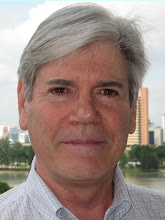
Quoted by the Financial Times on Valentine’s day: “Philip Verleger, an energy economist, argues that ‘nightfall is coming’ for big oil companies, threatened on one side by the rise of renewable energy and climate policies that will curb the growth of fossil fuel demand, and on the other by the smaller, nimbler companies that lead the shale oil and gas industry.”
“The companies that are wedded to high-cost projects, like deep water in Brazil, are going to have to take some large write-downs,” he says. “The likelihood that those investments are going to pay off over the next 20 years is extremely low.”
Companies that put their hopes on a strong rebound in oil “aren’t going to make it”, he adds.
In fact anyone who has watched Jeremy Rifkin’s presentation on the Third Industrial Revolution & a Zero Marginal Cost Society (view it here: https://youtu.be/5mQj574Cv_k ) will realise that fossil fuel prices will not recover sufficiently to make current or future oil-major funded and developed large projects viable.
Oil Major Executives should abandon their pipe dreams about the golden days of crude prices returning, as they did before the previous price dip crises; el Dorado will not rise again from the mists of the future.
There is an oil glut because oil is in less demand; a fundamental shift towards renewable sources of energy has taken place and is gathering speed.
Oil Exec’s should take on-board Ms Nadya Zhexembayeva’s advice and reinvent their business models; her short but telling evocation to reinvent can be viewed here: https://youtu.be/f4kySpcdvFg
It is time to acknowledge that Change has Changed and to Embrace the Exponential.
Investing in renewable energy production, storage and distribution infrastructure is the only viable future strategy for the medium and long term.
Showing posts with label future. Show all posts
Showing posts with label future. Show all posts
Thursday, February 18, 2016


Thursday, January 14, 2016
Surviving the Deviant Risks that KILL Businesses – Don’t do ‘a Volkswagen’
A happenstance that occurs for the first time and causes serious, usually fatal losses for a particular business, an industry or a whole system – the financial system for example – has become known as a Black Swan Event but is also termed an Unquantifiable Uncertainty.
Unquantifiable because there is no data relating to the past on which to base a probability model, so no way to estimate the loss that may be incurred when the event happens.
Uncertainty is an alternative word used to describe a risk or uncertain outcome; in this case a detailed description of the risk event cannot be imagined therefore specific avoidance, corrective or remedial actions cannot be organised.
The Board and Senior Executives of Volkswagen AG should have realised that an extreme risk event could strike the business at any time. That is assuming that they had read or heard of The Black Swan by Nassim Nicholas Taleb. If in fact they were aware of the chameleon in the room that could destroy the business – in the form of an unimaginable risk with devastating potential – they did not prepare to deal with such an event.
Perhaps they thought that since they could not imagine what may happen to overwhelm VW Group they should simply wait for a crisis to break and then thrash around, blame each other, fire people, apologise, ‘re-arrange the deckchairs on the Titanic’ and put aside a hopelessly inadequate €6.5 billion.
Unimaginable Risk Drivers must not be overlooked simply because they cannot be imagined, described or counted. They will occur in the future and they are the risks most likely to destroy real businesses.
The Financial Times article of September 30, 2015 titled Seven Reasons Volkswagen is worse than Enron states: “The stock collapse is only the beginning. Potentially irreparable reputational damage, a crisis of confidence and massive legal liabilities could do the company in.” Volkswagen AG’s (stock) price dropped from 213.45 on July 2nd to 96.50 on October 1, 2015.
Most physical business Board Risk Committees, Chief Risk Officers, CEOs and business Owners only pay attention to assessing and managing those risks for which data is available. They follow the banking fraternity’s love affair with risk and probability models, which naturally cannot be produced in the absence of data. Of course that means that when unimaginable risks occur they are totally unprepared to manage the fallout, so they miss opportunities to limit the damage and/or opportunities to capitalise on the resulting market turmoil.
The consequences that ensued in the wake of Lehman’s collapse in September 2008 negatively affected the lives and livelihoods of millions of people in every corner of the Globe, and will continue to do so for at least a decade. However the purchase of Bear Stearns (including its valuable New York office building) in the midst of this Extreme Risk crisis is an example of a survivor (J P Morgan Chase) taking over a failing competitor based on ‘fire sale’ asset values; asset values were falling rapidly as inter-bank credit evaporated and banks frantically chased cash to meet margin calls and other obligations falling due.
Despite all the previously unimaginable disasters that have occurred there is a widespread naïve belief that mathematical models can foretell future risk. However models cannot because they use historical data, ignore data projections that fall beyond 99.7% probability, include too few variables and use simplified assumptions.
In the face of rapid change and globalisation, data driven risk management methods alone are no longer adequate. Unquantifiable Uncertainty Risk cannot be modelled because there is no data, so cannot be covered by traditional risk management practices or insurance; moreover extreme risk events (Black Swans) occur relatively frequently and result in business failures.
Business leaders are ‘risk managers’ entrusted with safeguarding the jobs of their employees and the assets of their investors therefore they must take seriously the possibility that those jobs and assets could be destroyed by an unimaginable extreme event.
Operating in the real world of business, as opposed to the purely financial world that only makes money, means facing future risks; hence Risk Management is about Managing the Future.
The challenge is that the Future does not exist; the past existed but only the present exists – one moment at a time. Therefore we cannot know the Future; in order to fulfil our responsibility to manage the Future we must imagine it and anticipate it. Three factors work in our favour as we attempt to anticipate the Future:
The Future is constrained by the existing environment both physical and social – it comes from today carrying the baggage of the past,
One major set of variables that shapes the Future is the collective decisions made by the world’s seven billion citizens, some of whom have more influence than others, and
As William Gibson said in 1993; “The Future is already here - it’s just not very evenly distributed.”
Searching the web and reading books such as An Optimist's Tour of the Future: One Curious Man Sets Out to Answer "What's Next?" by Mark Stevenson and watching TED.com talks like Nadya Zhexembayeva’s To Hold On, Let Go; also available on YouTube, can provide a lot of material to help create planning scenarios.
Of course the other set of variables that shape the Future is provided by Nature and Major Impact Events that result in one or a combination of the following categories of risk; Black Swan Event Risk, Liquidity Risk, Operational Risk, Concentration and Correlation Risk, and Lack of Flexibility and Agility Risk.
All of these risk variants could strike a real business as a result of a catalyst that was previously unimaginable.
In all cases except the first mentioned (Black Swan Event Risk) it is possible to take pre-emptive practical steps to protect a business; for example reinventing the business model every three and half years, as Ms Zhexembayeva recommends, could avoid the negative impact of the Lack of Flexibility and Agility inherent in most businesses today.
On the other hand the most challenging variables that shape the Future are those caused by Nature and Major Impact Events, collectively often called Black Swan Events. When such events have arisen in the past they have caused many real businesses to fail – thus destroying jobs and investors’ assets.
Therefore Executives and Owners in real businesses wishing to prepare to deal with and possibly profit from a Black Swan Event, require an entirely new approach in order to be adequately prepared to manage the fallout. Otherwise they risk missing opportunities to limit the damage and/or to capitalise on any bargain arising in the resulting market turmoil.
Black Swan events that were unimaginable before they happened have occurred frequently in the recent past, some examples of those that had global impact are listed here:
1990 US High Yield (HY) bond market collapses
1991 Oil price surge
1992 Swedish banking crisis
1994 Mexican crisis
1997 Asian crisis
1998 Russia default, Rouble crash, Long-Term Capital Management LP (LTCM) collapse
2000 TMT (Technology Media & Telecoms) collapse (a.k.a. Dot-com Bubble)
2001 9/11 payment system disruption
2002 Argentina crisis
2004 Russian banking crisis, Indian Ocean tsunami
2008 Global credit crisis
2010 Greece
2011 Japan triple tragedy - force 9 quake, massive tsunami and Fukushima nuclear melt-down
2014 Rouble in free-fall
2015 Euro – Swiss Franc (EUR-CHF) exchange rate CAP removed
Black Swan events are generally comprehended in respect of Financial Institutions and systemic catastrophes, as illustrated by the above listed examples. Nevertheless lesser and often more local events with the same devastating consequences and bearing the same characteristics often occur. These mini- or industry specific or geographically localised or single supply chain related incidents may only directly touch a single business, a group of connected businesses or the businesses within a region however they almost inevitably prove fatal in respect of those businesses directly or indirectly affected.
This is due to the fact that leaders in the vast majority of businesses do not prepare to deal with the fallout that follows unimaginable events; the associated risks are ignored simply because they cannot be imagined, described or counted.
Therefore, should an Unquantifiable Uncertainty strike, the corporate entities' equity capital becomes the last line of defence against bankruptcy.
Although bankruptcy of failed businesses is considered part of the capitalism notion of creative destruction it is not a satisfactory outcome as it destroys jobs, destroys investments and often devastates communities. Hence it is preferable that business leaders prepare to ensure the survival of their business regardless of what may happen to threaten its future.
Having recognised the Unquantifiable Uncertainty risk category the first sensible step to take is to anticipate the potential maximum future loss that could result from such an occurrence. Armed with this information the leadership team should think through and discuss possible defensive measures that could be taken in order to protect the entity's capital and ongoing concern status.
The aim of such preparation would be to arm executives with an array of possible action steps that could be tailored to any situation that may arise, thus enabling them (a) to react immediately and effectively in any extreme situation and thereby (b) to be in a position to capitalise on the opportunities that are bound to arise in the wake of such situations.
As a first planning step the size of the challenge can be estimated by aggregating the ‘forced sale’ net disposable value of the entity’s assets; which could be referred to as the ‘Maximum Covered Liabilities’ (MCL) if no management action is initiated. In other words the MCL is the amount of the liabilities that can be paid using asset sale proceeds, the balance of the liabilities plus equity and reserves can be termed the 'Maximum Uncovered Liabilities' (MUL).
The MUL minus the Equity Capital could be referred to as the ‘Owner Protection Gap’ (OPG). Preparation for dealing with a Black Swan event should focus on identifying actions that could be taken to reduce the OPG in the face of an Extreme Risk situation.
Black Swans can be positive as well as negative, depending on the circumstances; Black Swans are also ‘scalable’, meaning the consequences positive or negative, have unknown limits.
In The Black Swan, Nassim Nicholas Taleb wrote; “Knowing you cannot predict does not mean that you cannot benefit from unpredictability. The bottom line: be prepared! Narrow-minded prediction (based on mathematical models) has an analgesic or therapeutic effect. Be aware of the numbing effect of magic numbers. Be prepared for all relevant eventualities.”
In short, Mr Taleb suggests that one should; “learn to distinguish between those human undertakings in which the lack of predictability can be (or has been) extremely beneficial and those where failure to understand the future caused harm, invest in preparedness, not in prediction. Chance favours the prepared but do not prepare for something precise, Black Swans cannot be predicted; and seize any opportunity, or anything that looks like an opportunity because opportunities are rare, very rare.”
Nadya Zhexembayeva, in her TED.com talk titled To Hold On, Let Go – Forget ‘Built to Last’ Build to Reinvent, suggested that those operating real businesses “must remake who we are, what we offer, and how we deliver our offerings to the world. Take the essence of what you are, and let go of everything else; because the business you are in today (will) not be the business you’ll be in three and a half years from now.”
Invest in Preparedness, not in Prediction
Business leaders are more likely to succeed in their most important responsibility, which is to protect the jobs of their employees and their investors’ assets, by being prepared to act effectively when a previously unimaginable risk driven event occurs and by reinventing their business model often enough to avoid becoming obsolete in the face of rapid change.
Ron Wells is the author of The Chameleon in the Room: Embrace Business Risk – Assure Survival & Growth, refer to www.t3plimited.com for more information.
Unquantifiable because there is no data relating to the past on which to base a probability model, so no way to estimate the loss that may be incurred when the event happens.
Uncertainty is an alternative word used to describe a risk or uncertain outcome; in this case a detailed description of the risk event cannot be imagined therefore specific avoidance, corrective or remedial actions cannot be organised.
The Board and Senior Executives of Volkswagen AG should have realised that an extreme risk event could strike the business at any time. That is assuming that they had read or heard of The Black Swan by Nassim Nicholas Taleb. If in fact they were aware of the chameleon in the room that could destroy the business – in the form of an unimaginable risk with devastating potential – they did not prepare to deal with such an event.
Perhaps they thought that since they could not imagine what may happen to overwhelm VW Group they should simply wait for a crisis to break and then thrash around, blame each other, fire people, apologise, ‘re-arrange the deckchairs on the Titanic’ and put aside a hopelessly inadequate €6.5 billion.
Unimaginable Risk Drivers must not be overlooked simply because they cannot be imagined, described or counted. They will occur in the future and they are the risks most likely to destroy real businesses.
The Financial Times article of September 30, 2015 titled Seven Reasons Volkswagen is worse than Enron states: “The stock collapse is only the beginning. Potentially irreparable reputational damage, a crisis of confidence and massive legal liabilities could do the company in.” Volkswagen AG’s (stock) price dropped from 213.45 on July 2nd to 96.50 on October 1, 2015.
Most physical business Board Risk Committees, Chief Risk Officers, CEOs and business Owners only pay attention to assessing and managing those risks for which data is available. They follow the banking fraternity’s love affair with risk and probability models, which naturally cannot be produced in the absence of data. Of course that means that when unimaginable risks occur they are totally unprepared to manage the fallout, so they miss opportunities to limit the damage and/or opportunities to capitalise on the resulting market turmoil.
The consequences that ensued in the wake of Lehman’s collapse in September 2008 negatively affected the lives and livelihoods of millions of people in every corner of the Globe, and will continue to do so for at least a decade. However the purchase of Bear Stearns (including its valuable New York office building) in the midst of this Extreme Risk crisis is an example of a survivor (J P Morgan Chase) taking over a failing competitor based on ‘fire sale’ asset values; asset values were falling rapidly as inter-bank credit evaporated and banks frantically chased cash to meet margin calls and other obligations falling due.
Despite all the previously unimaginable disasters that have occurred there is a widespread naïve belief that mathematical models can foretell future risk. However models cannot because they use historical data, ignore data projections that fall beyond 99.7% probability, include too few variables and use simplified assumptions.
In the face of rapid change and globalisation, data driven risk management methods alone are no longer adequate. Unquantifiable Uncertainty Risk cannot be modelled because there is no data, so cannot be covered by traditional risk management practices or insurance; moreover extreme risk events (Black Swans) occur relatively frequently and result in business failures.
Business leaders are ‘risk managers’ entrusted with safeguarding the jobs of their employees and the assets of their investors therefore they must take seriously the possibility that those jobs and assets could be destroyed by an unimaginable extreme event.
Operating in the real world of business, as opposed to the purely financial world that only makes money, means facing future risks; hence Risk Management is about Managing the Future.
The challenge is that the Future does not exist; the past existed but only the present exists – one moment at a time. Therefore we cannot know the Future; in order to fulfil our responsibility to manage the Future we must imagine it and anticipate it. Three factors work in our favour as we attempt to anticipate the Future:
The Future is constrained by the existing environment both physical and social – it comes from today carrying the baggage of the past,
One major set of variables that shapes the Future is the collective decisions made by the world’s seven billion citizens, some of whom have more influence than others, and
As William Gibson said in 1993; “The Future is already here - it’s just not very evenly distributed.”
Searching the web and reading books such as An Optimist's Tour of the Future: One Curious Man Sets Out to Answer "What's Next?" by Mark Stevenson and watching TED.com talks like Nadya Zhexembayeva’s To Hold On, Let Go; also available on YouTube, can provide a lot of material to help create planning scenarios.
Of course the other set of variables that shape the Future is provided by Nature and Major Impact Events that result in one or a combination of the following categories of risk; Black Swan Event Risk, Liquidity Risk, Operational Risk, Concentration and Correlation Risk, and Lack of Flexibility and Agility Risk.
All of these risk variants could strike a real business as a result of a catalyst that was previously unimaginable.
In all cases except the first mentioned (Black Swan Event Risk) it is possible to take pre-emptive practical steps to protect a business; for example reinventing the business model every three and half years, as Ms Zhexembayeva recommends, could avoid the negative impact of the Lack of Flexibility and Agility inherent in most businesses today.
On the other hand the most challenging variables that shape the Future are those caused by Nature and Major Impact Events, collectively often called Black Swan Events. When such events have arisen in the past they have caused many real businesses to fail – thus destroying jobs and investors’ assets.
Therefore Executives and Owners in real businesses wishing to prepare to deal with and possibly profit from a Black Swan Event, require an entirely new approach in order to be adequately prepared to manage the fallout. Otherwise they risk missing opportunities to limit the damage and/or to capitalise on any bargain arising in the resulting market turmoil.
Black Swan events that were unimaginable before they happened have occurred frequently in the recent past, some examples of those that had global impact are listed here:
1990 US High Yield (HY) bond market collapses
1991 Oil price surge
1992 Swedish banking crisis
1994 Mexican crisis
1997 Asian crisis
1998 Russia default, Rouble crash, Long-Term Capital Management LP (LTCM) collapse
2000 TMT (Technology Media & Telecoms) collapse (a.k.a. Dot-com Bubble)
2001 9/11 payment system disruption
2002 Argentina crisis
2004 Russian banking crisis, Indian Ocean tsunami
2008 Global credit crisis
2010 Greece
2011 Japan triple tragedy - force 9 quake, massive tsunami and Fukushima nuclear melt-down
2014 Rouble in free-fall
2015 Euro – Swiss Franc (EUR-CHF) exchange rate CAP removed
Black Swan events are generally comprehended in respect of Financial Institutions and systemic catastrophes, as illustrated by the above listed examples. Nevertheless lesser and often more local events with the same devastating consequences and bearing the same characteristics often occur. These mini- or industry specific or geographically localised or single supply chain related incidents may only directly touch a single business, a group of connected businesses or the businesses within a region however they almost inevitably prove fatal in respect of those businesses directly or indirectly affected.
This is due to the fact that leaders in the vast majority of businesses do not prepare to deal with the fallout that follows unimaginable events; the associated risks are ignored simply because they cannot be imagined, described or counted.
Therefore, should an Unquantifiable Uncertainty strike, the corporate entities' equity capital becomes the last line of defence against bankruptcy.
Although bankruptcy of failed businesses is considered part of the capitalism notion of creative destruction it is not a satisfactory outcome as it destroys jobs, destroys investments and often devastates communities. Hence it is preferable that business leaders prepare to ensure the survival of their business regardless of what may happen to threaten its future.
Having recognised the Unquantifiable Uncertainty risk category the first sensible step to take is to anticipate the potential maximum future loss that could result from such an occurrence. Armed with this information the leadership team should think through and discuss possible defensive measures that could be taken in order to protect the entity's capital and ongoing concern status.
The aim of such preparation would be to arm executives with an array of possible action steps that could be tailored to any situation that may arise, thus enabling them (a) to react immediately and effectively in any extreme situation and thereby (b) to be in a position to capitalise on the opportunities that are bound to arise in the wake of such situations.
As a first planning step the size of the challenge can be estimated by aggregating the ‘forced sale’ net disposable value of the entity’s assets; which could be referred to as the ‘Maximum Covered Liabilities’ (MCL) if no management action is initiated. In other words the MCL is the amount of the liabilities that can be paid using asset sale proceeds, the balance of the liabilities plus equity and reserves can be termed the 'Maximum Uncovered Liabilities' (MUL).
The MUL minus the Equity Capital could be referred to as the ‘Owner Protection Gap’ (OPG). Preparation for dealing with a Black Swan event should focus on identifying actions that could be taken to reduce the OPG in the face of an Extreme Risk situation.
Black Swans can be positive as well as negative, depending on the circumstances; Black Swans are also ‘scalable’, meaning the consequences positive or negative, have unknown limits.
In The Black Swan, Nassim Nicholas Taleb wrote; “Knowing you cannot predict does not mean that you cannot benefit from unpredictability. The bottom line: be prepared! Narrow-minded prediction (based on mathematical models) has an analgesic or therapeutic effect. Be aware of the numbing effect of magic numbers. Be prepared for all relevant eventualities.”
In short, Mr Taleb suggests that one should; “learn to distinguish between those human undertakings in which the lack of predictability can be (or has been) extremely beneficial and those where failure to understand the future caused harm, invest in preparedness, not in prediction. Chance favours the prepared but do not prepare for something precise, Black Swans cannot be predicted; and seize any opportunity, or anything that looks like an opportunity because opportunities are rare, very rare.”
Nadya Zhexembayeva, in her TED.com talk titled To Hold On, Let Go – Forget ‘Built to Last’ Build to Reinvent, suggested that those operating real businesses “must remake who we are, what we offer, and how we deliver our offerings to the world. Take the essence of what you are, and let go of everything else; because the business you are in today (will) not be the business you’ll be in three and a half years from now.”
Invest in Preparedness, not in Prediction
Business leaders are more likely to succeed in their most important responsibility, which is to protect the jobs of their employees and their investors’ assets, by being prepared to act effectively when a previously unimaginable risk driven event occurs and by reinventing their business model often enough to avoid becoming obsolete in the face of rapid change.
Ron Wells is the author of The Chameleon in the Room: Embrace Business Risk – Assure Survival & Growth, refer to www.t3plimited.com for more information.
Tuesday, September 22, 2015
Why write “The Chameleon in the Room”? How does it differ from other Risk Books?
My purpose in writing this book was to fill the gap that I perceive exists in the technical literature relating to enterprise risk management. To my mind Banks and Financial Institutions are well served by academia, since they have invested heavily in sponsoring research, but that research has focussed on producing data driven and probability orientated solutions.
Such solutions are by their nature backward looking since the only data that exists arose in the past and deduced probabilities are extrapolations based on data. Therefore those solutions only have limited reliability (a) in relation to risk drivers that occurred in the past and (b) in relation to large portfolios of risky transactions.
Some time ago this realisation led me to focus on a holistic future-oriented risk assessment and management approach, which is the foundation of this book.
The current and increasingly rapid rate of change in the global business environment has rendered data driven risk control methods inadequate. Therefore those responsible for the leadership, operation and survival of real businesses - and credit executives managing narrow B2B customer and supplier portfolios - cannot usefully employ probability based approaches.
Common business risks are well understood and can be anticipated, so owners or executives having read my book Global Credit Management – an Executive Summary, for example, will undoubtedly put in place measures to ensure the durability of their business should common risks arise.
However research and experience over the past 30 years has established that in most cases when businesses failed the cause was either:
A – An unimaginable risk driven by a unique occurrence, or
B - Due to the actions of incompetent or fraudulent management.
Incompetence and fraud are risk drivers that are well understood and managed through internal/external audits and, in the case of buyers and suppliers, by thorough analysis and careful on-going monitoring by credit risk executives.
However unimaginable risk drivers have thus far been overlooked simply because they cannot be imagined, described or counted.
Nevertheless they will occur in the future and they are the risks most likely to kill real businesses.
Examples of such risks are Black Swan Event Risk, Liquidity Risk, Operational Risk, Correlation-Concentration Risk and Ignored External Change Risk; hence my decision to focus attention in The Chameleon on these risks.
 Assessment and management of common business risks is covered at a high level in the final chapter in order to round off the subject.
I am not an academic so I have written a practical work, with each challenge outlined and a practical example of a possible solution provided.
The book is available in Paperback and Kindle eBook versions worldwide through all Amazon websites, CreateSpace eStore (http://bit.ly/1IzgTEg) and eStoreT3P (http://bit.ly/1LZhALZ).
Ron Wells
Such solutions are by their nature backward looking since the only data that exists arose in the past and deduced probabilities are extrapolations based on data. Therefore those solutions only have limited reliability (a) in relation to risk drivers that occurred in the past and (b) in relation to large portfolios of risky transactions.
Some time ago this realisation led me to focus on a holistic future-oriented risk assessment and management approach, which is the foundation of this book.
The current and increasingly rapid rate of change in the global business environment has rendered data driven risk control methods inadequate. Therefore those responsible for the leadership, operation and survival of real businesses - and credit executives managing narrow B2B customer and supplier portfolios - cannot usefully employ probability based approaches.
Common business risks are well understood and can be anticipated, so owners or executives having read my book Global Credit Management – an Executive Summary, for example, will undoubtedly put in place measures to ensure the durability of their business should common risks arise.
However research and experience over the past 30 years has established that in most cases when businesses failed the cause was either:
A – An unimaginable risk driven by a unique occurrence, or
B - Due to the actions of incompetent or fraudulent management.
Incompetence and fraud are risk drivers that are well understood and managed through internal/external audits and, in the case of buyers and suppliers, by thorough analysis and careful on-going monitoring by credit risk executives.
However unimaginable risk drivers have thus far been overlooked simply because they cannot be imagined, described or counted.
Nevertheless they will occur in the future and they are the risks most likely to kill real businesses.
Examples of such risks are Black Swan Event Risk, Liquidity Risk, Operational Risk, Correlation-Concentration Risk and Ignored External Change Risk; hence my decision to focus attention in The Chameleon on these risks.

I am not an academic so I have written a practical work, with each challenge outlined and a practical example of a possible solution provided.
The book is available in Paperback and Kindle eBook versions worldwide through all Amazon websites, CreateSpace eStore (http://bit.ly/1IzgTEg) and eStoreT3P (http://bit.ly/1LZhALZ).
Ron Wells
Friday, July 10, 2015
Chameleon in the Room: Embrace Business Risk - Assure Survival & Growth
An innovative new risk book is now available in paperback on Amazon.com, Amazon.co.uk and other Europe based Amazon websites.
It is also available as a Kindle version on all Amazon websites worldwide; including India, Mexico, Brazil, Australia, Japan and Canada.
The paperback and pdf versions are available for sale through the eStoreT3P website; payments are processed by PayPal.
 The Chameleon in the Room is unusual as it provides tools specifically designed to manage risks that are often ignored by executives; the same risks that have surprised and fatally wounded many giant enterprises, and countless SMEs.
The 108 pages are full of practical strategies and tactics for the management of the risks that injure real businesses. Real businesses are those that produce, trade, consume or distribute physical commodities, machinery, parts and equipment or consumer products and services.
Please click on this link to read the contents pages and a sample extract from the second chapter: http://www.book2look.de/book/XDU8RVItrX
Particularly addressed are the concerns and responsibilities of quoted company Executive Directors, Non-Executive Directors and ‘C-Suite’ Executives; as well as Owners and Directors of SME businesses and start-up Entrepreneurs.
Additionally Credit Executives may wish to assess their customers in the light of the 'unexpected and highly consequential' and ‘unimaginable’ risks, and associated management practices illustrated in this book.
In the face of rapid change and globalisation, data driven risk management methods alone are no longer adequate. Therefore this text presents alternative ways to cope with the diabolical array of risks that threaten non-financial businesses; including some seldom written about to date for example:
• Black Swan Events,
• Liquidity Risk,
• External Operational Risk,
• Concentration and Correlation Risk, and
• Lack of Flexibility Risk.
Related reference numbers are: ISBN: 9780957627949 / ASIN: B0118E0T84
It is also available as a Kindle version on all Amazon websites worldwide; including India, Mexico, Brazil, Australia, Japan and Canada.
The paperback and pdf versions are available for sale through the eStoreT3P website; payments are processed by PayPal.

The 108 pages are full of practical strategies and tactics for the management of the risks that injure real businesses. Real businesses are those that produce, trade, consume or distribute physical commodities, machinery, parts and equipment or consumer products and services.
Please click on this link to read the contents pages and a sample extract from the second chapter: http://www.book2look.de/book/XDU8RVItrX
Particularly addressed are the concerns and responsibilities of quoted company Executive Directors, Non-Executive Directors and ‘C-Suite’ Executives; as well as Owners and Directors of SME businesses and start-up Entrepreneurs.
Additionally Credit Executives may wish to assess their customers in the light of the 'unexpected and highly consequential' and ‘unimaginable’ risks, and associated management practices illustrated in this book.
In the face of rapid change and globalisation, data driven risk management methods alone are no longer adequate. Therefore this text presents alternative ways to cope with the diabolical array of risks that threaten non-financial businesses; including some seldom written about to date for example:
• Black Swan Events,
• Liquidity Risk,
• External Operational Risk,
• Concentration and Correlation Risk, and
• Lack of Flexibility Risk.
Related reference numbers are: ISBN: 9780957627949 / ASIN: B0118E0T84
Friday, June 5, 2015
Redesigning Work, Employment & the Social Contract - a presentation by Heather McGowan
Published on June 4, 2015
Heather McGowan - Academic Entrepreneur and Innovation Strategist
In this 23 minute talk presented in Australia recently, Ms McGowan provides an easy to follow view of the future of work, careers and the skills that will be in demand. It is both amusing and thought provoking. Certainly it is a ‘must see’ video that can be viewed on YouTube via this link: http://youtu.be/zDf-zENKDsQ

BarrettWells
BarrettWells Credit Resources is a trading name of T3P LIMITED
URL: http://www.barrettwells.com
Heather McGowan - Academic Entrepreneur and Innovation Strategist
In this 23 minute talk presented in Australia recently, Ms McGowan provides an easy to follow view of the future of work, careers and the skills that will be in demand. It is both amusing and thought provoking. Certainly it is a ‘must see’ video that can be viewed on YouTube via this link: http://youtu.be/zDf-zENKDsQ

BarrettWells
BarrettWells Credit Resources is a trading name of T3P LIMITED
URL: http://www.barrettwells.com
Sunday, March 15, 2015
A Global Shortage of Required Skills Threatens Prosperity in the lead up to and post 2030
A study by Rainer Strack presented in an amusing TED Talk indicates that by 2030, many of the world's largest economies will have more jobs than adult citizens to do those jobs.
What is worse there will be a global shortage of people with the skills to fill those jobs. In order to view this 12 minute talk click this link: http://go.ted.com/tdV
Using the example of Germany, Strack illustrates that despite the global population ballooning to about 8.5 billion by 2030 the working age populations in major producing countries will have shrunk. The situation in Germany is illustrated here, bearing in mind that the demographic profile utilised exists so the 2030 position is accurately predicted; ignoring immigration/emigration and any unfortunate calamity that may occur.

The same exercise applied to other major producing nations indicates the seriousness of the situation:

Of course the skill distribution amongst the working age population versus the needs of these economies in 2030 is more important than simple numbers.
In this talk Strack describes the Skills Mismatch that will surface despite the use of robots and other artificial intelligence in the manufacturing and service sectors. He points to the motor manufacturing industry as an area that has adopted technology to more or less replace people on the production line but has spawned associated jobs, such that more or less the same numbers of people are now involved in the process. However those new jobs require very different skill sets.
This leads to the conclusion that the global community needs to take urgent steps to ensure a suitably equipped workforce is available to maintain global GDP at adequate levels in the future. The reduction in workforce coupled with a probable skills mismatch threatens the prosperity of future generations if action is not initiated without delay.
What is worse there will be a global shortage of people with the skills to fill those jobs. In order to view this 12 minute talk click this link: http://go.ted.com/tdV
Using the example of Germany, Strack illustrates that despite the global population ballooning to about 8.5 billion by 2030 the working age populations in major producing countries will have shrunk. The situation in Germany is illustrated here, bearing in mind that the demographic profile utilised exists so the 2030 position is accurately predicted; ignoring immigration/emigration and any unfortunate calamity that may occur.

The same exercise applied to other major producing nations indicates the seriousness of the situation:

Of course the skill distribution amongst the working age population versus the needs of these economies in 2030 is more important than simple numbers.
In this talk Strack describes the Skills Mismatch that will surface despite the use of robots and other artificial intelligence in the manufacturing and service sectors. He points to the motor manufacturing industry as an area that has adopted technology to more or less replace people on the production line but has spawned associated jobs, such that more or less the same numbers of people are now involved in the process. However those new jobs require very different skill sets.
This leads to the conclusion that the global community needs to take urgent steps to ensure a suitably equipped workforce is available to maintain global GDP at adequate levels in the future. The reduction in workforce coupled with a probable skills mismatch threatens the prosperity of future generations if action is not initiated without delay.
Thursday, October 2, 2014
To retain talent the role demands of Finance must change, by David Axson
In the linked video Dave Axson discusses the rôle that Finance Professionals should be allowed to play in businesses in order to retain and attract the talent that they so desperately need.
Dave Axson is author of The Management Mythbuster (John Wiley & Sons 2010) and MD of Accenture.
“What we are dealing with today is an environment where there are many more variables that could potentially impact your business. Twenty to twenty-five years ago you were concerned about your competitors down the street…..” click this link to view this short but interesting talk.
Dave Axson is author of The Management Mythbuster (John Wiley & Sons 2010) and MD of Accenture.
“What we are dealing with today is an environment where there are many more variables that could potentially impact your business. Twenty to twenty-five years ago you were concerned about your competitors down the street…..” click this link to view this short but interesting talk.
Thursday, December 22, 2011
China: Perception versus Reality....
Western business leaders, who are devoid of ideas, continue to rationalise their inability to capitalise on the opportunities that abound despite the so-called crises. I am wary of reading Western slanted commentaries designed to ‘prove’ that China’s relentless march forward is bound to falter, so it was refreshing to read an article titled ‘China’s new Corporate Champions’ written by Joel Backaler, see: http://www.bbc.co.uk/news/business-16206489 for the full text, courtesy of BBC.com.
Here is a brief extract, quote:
The global economic downturn presented these Chinese companies with a unique opportunity to capture market share as global consumers increasingly prioritised value for money. Western multinationals have limited time to adapt their strategies and regain their momentum before these new competitors can further consolidate their presence in key markets.
Chinese companies are perceived by some as opportunistic firms with a "land-grab" mentality that lacks well thought-out long-term strategy. Western executives often cite the large scale investments by Chinese companies in Africa's resources sector as an example of this type of behaviour.
These same executives also argue that Chinese companies' fast growth will likely not be sustainable in the longer term due to their short-sighted business practices. In reality though, there is another side to the story in which Chinese companies have been developing local innovations that are suited for their home country but can also be adapted for overseas markets to boost on-going growth.
End Quote
Western business leaders rationalise their inaction in respect of China and Asia generally by clutching on any piece of bad news and blowing it out of proportion; holding crises meetings to focus on the negatives while ignoring their responsibility to identify and capture the opportunities by changing their business models to acknowledge that they are no longer effective.
The abovementioned article appeared alongside an article titled ‘China: A bigger lender than the World Bank’, which charts China’s advances into the resource rich emerging countries; going where ‘Angels (Western banks and businesses) fear to tread’.
BarrettWells
Here is a brief extract, quote:
The global economic downturn presented these Chinese companies with a unique opportunity to capture market share as global consumers increasingly prioritised value for money. Western multinationals have limited time to adapt their strategies and regain their momentum before these new competitors can further consolidate their presence in key markets.
Chinese companies are perceived by some as opportunistic firms with a "land-grab" mentality that lacks well thought-out long-term strategy. Western executives often cite the large scale investments by Chinese companies in Africa's resources sector as an example of this type of behaviour.
These same executives also argue that Chinese companies' fast growth will likely not be sustainable in the longer term due to their short-sighted business practices. In reality though, there is another side to the story in which Chinese companies have been developing local innovations that are suited for their home country but can also be adapted for overseas markets to boost on-going growth.
End Quote
Western business leaders rationalise their inaction in respect of China and Asia generally by clutching on any piece of bad news and blowing it out of proportion; holding crises meetings to focus on the negatives while ignoring their responsibility to identify and capture the opportunities by changing their business models to acknowledge that they are no longer effective.
The abovementioned article appeared alongside an article titled ‘China: A bigger lender than the World Bank’, which charts China’s advances into the resource rich emerging countries; going where ‘Angels (Western banks and businesses) fear to tread’.
BarrettWells
Subscribe to:
Posts (Atom)